

A Quest Fulfilled
Quiet. Many of us think we know what it means to be quiet. We live in a world of perpetual connection. With texting, messaging, WhatsApp, TikTok, and endless other ways to communicate, do we still know what genuine “quiet” is?
In the states of West Virginia, Maryland, and Virginia is a 13,000 square-mile area known as the National Radio Quiet Zone (NRQZ). To put it in perspective, this is roughly the size of Belgium. Within this zone you will find the National Radio Astronomy Observatory at Green Bank, WV.
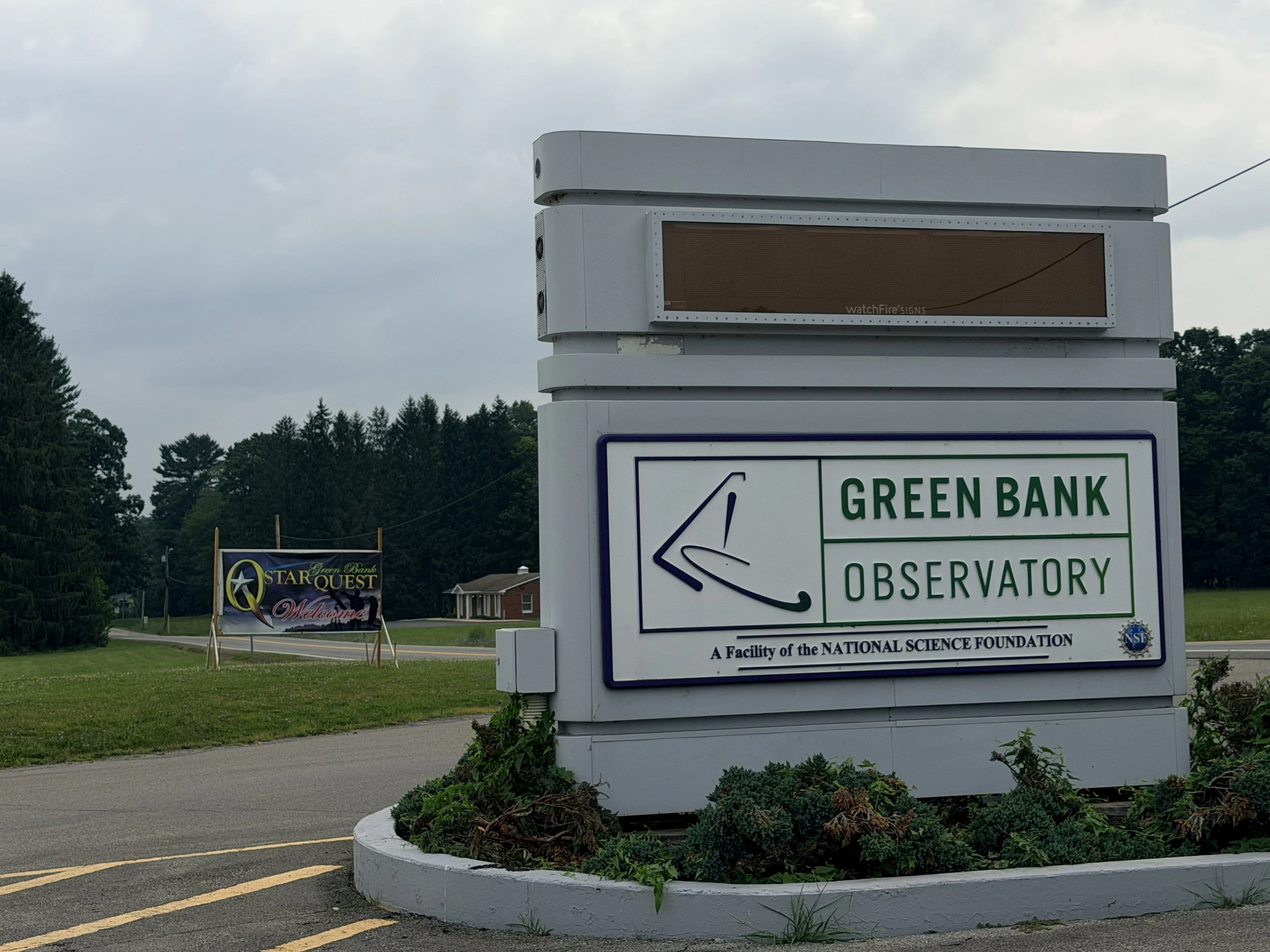
Entrance to the observatory
The location of this observatory is very deliberate. It is located in the Allegheny mountain range, a natural buffer to radio waves. Thirty miles away is Sugar Grove Station, a former Navy listening station now operated by the National Security Agency. In 1958, with the proliferation of radio transmissions post World War II, it was determined that these terrestrial transmissions would interfere with the telescopes at Green Bank in their detection of the faint deep-space signals of our galaxy. This lead to the creation of the NRQZ, an area heavily regulated with the type and amount of radio waves that can be used. Within 10 miles of the Green Bank Observatory (GBO), the West Virginia Radio Astronomy Zone regulations are in effect which greatly tightens the federal regulations. Within this area you will have no cell signal, no Wi-Fi, and heavily shielded electronics such as microwave ovens. When visiting the facility, all electronics must be turned off, and put into Faraday cage boxes to keep from interfering with the telescopes. All vehicles on-site are diesel-powered, as the spark plugs from gasoline engines produce enough electromagnetic interference to be detected.
The pride of the GBO is the Robert C. Byrd Green Bank Telescope, commonly known as the GBT. This telescope is the world’s largest fully-steerable radio telescope. This 100-meter device is one of the most sensitive radio telescopes ever built. Its list of discoveries are long, including gravitational waves, pulsars, and detailed mapping of Milky Way structures.
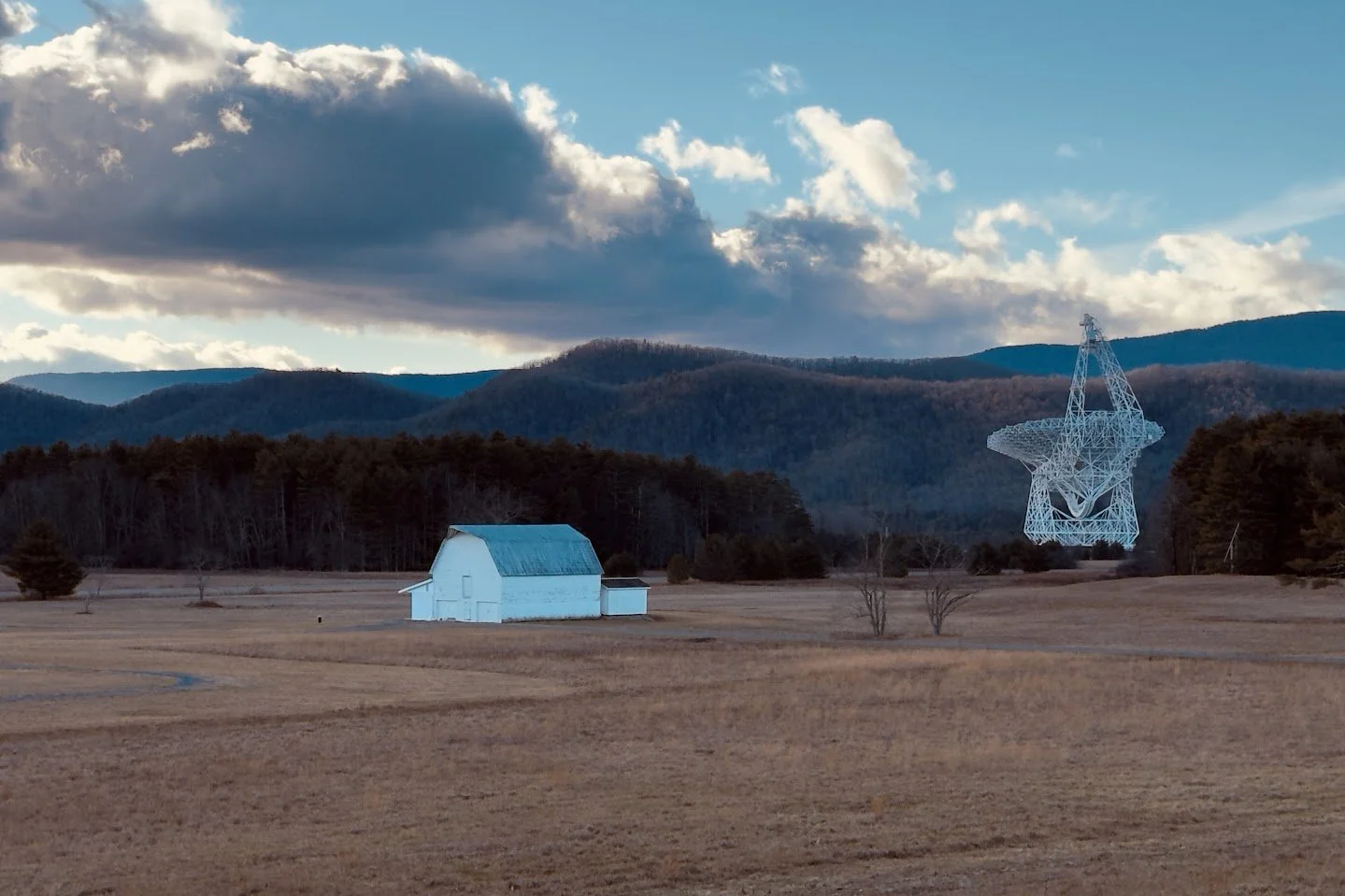
Robert C. Byrd Green Bank Telescope - December, 2024
It was in this location that I found myself July 15-18, 2026. Having grown up in WV, I was very familiar with the GBO, and had visited many times, so I knew what I was getting into.
While perusing Facebook one day, the algorithm decided I needed to know about this event being organized by the Central Appalachian Astronomy Club called the Green Bank Star Quest. This was going to be the 21st year of this event, and I was surprised I had not heard of it before. This event is one of the premier east-coast star parties, and is the only star party that combines observational as well as radio astronomy.
I knew I had to go. After checking with my wife (this year is our 30th wedding anniversary, and our anniversary date is July 20, so I would be cutting it close!), she said there was no problem if I went, however she did not want to go and campout in a field in July and sleep in a bunkhouse. So I was on my own.
I packed up the truck with my imaging rig, my visual rig, and my Seestar S50. I also had a Celestron Starsense telescope that I was going to deliver for my 9-year-old nephew’s upcoming birthday.
I arrived on-site early afternoon on July 15 and got checked in. I was assigned a spot in the bunkhouse, a facility for visiting groups to stay in. The bunkhouse is split into two sleeping areas (men & women) with 15 bunk beds and very nice bathroom & shower facilities. It also had a common sitting area with refrigerator as well as a washer and dryer, and (most importantly) was air conditioned! I set up my bunk, unloaded my luggage, and proceeded to the observing field.
The observing field is located roughly a mile from the GBT, and with the telescope currently down for summer maintenance, we were going to be allowed to use our astrophotography equipment (again, there was still no Wi-Fi for external communication). This being my first visit to this event and my first star party ever, I wanted to stay out of everyone else’s way. I chose a spot near the back of the field along the tree line and proceeded to setup my canopy and telescopes. As the week unfolded, I would leave the truck parked down here by the telescopes, and would walk the short distance along the nature trail back to the bunkhouse.
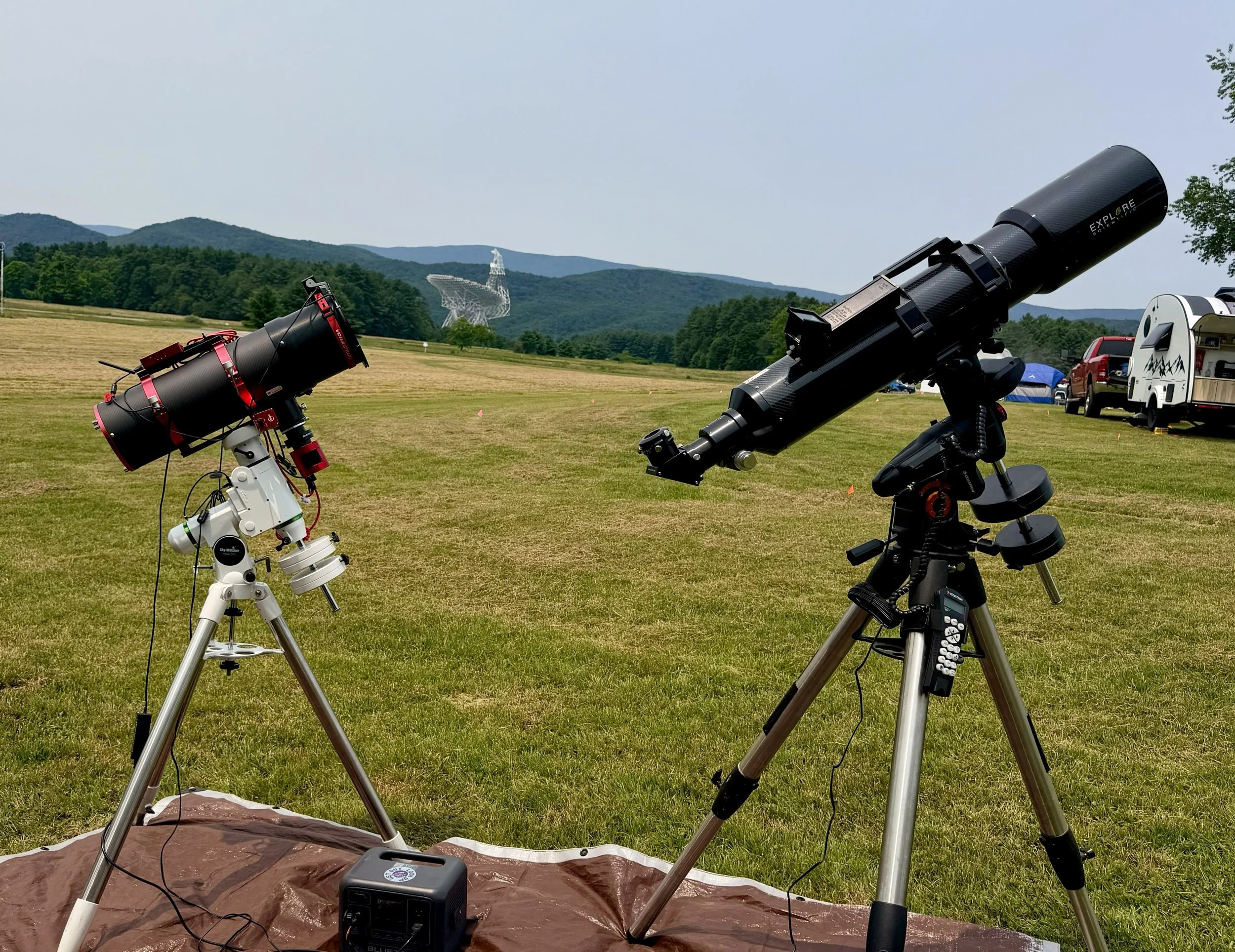
My imaging rig and visual rig with the GBT in the background.
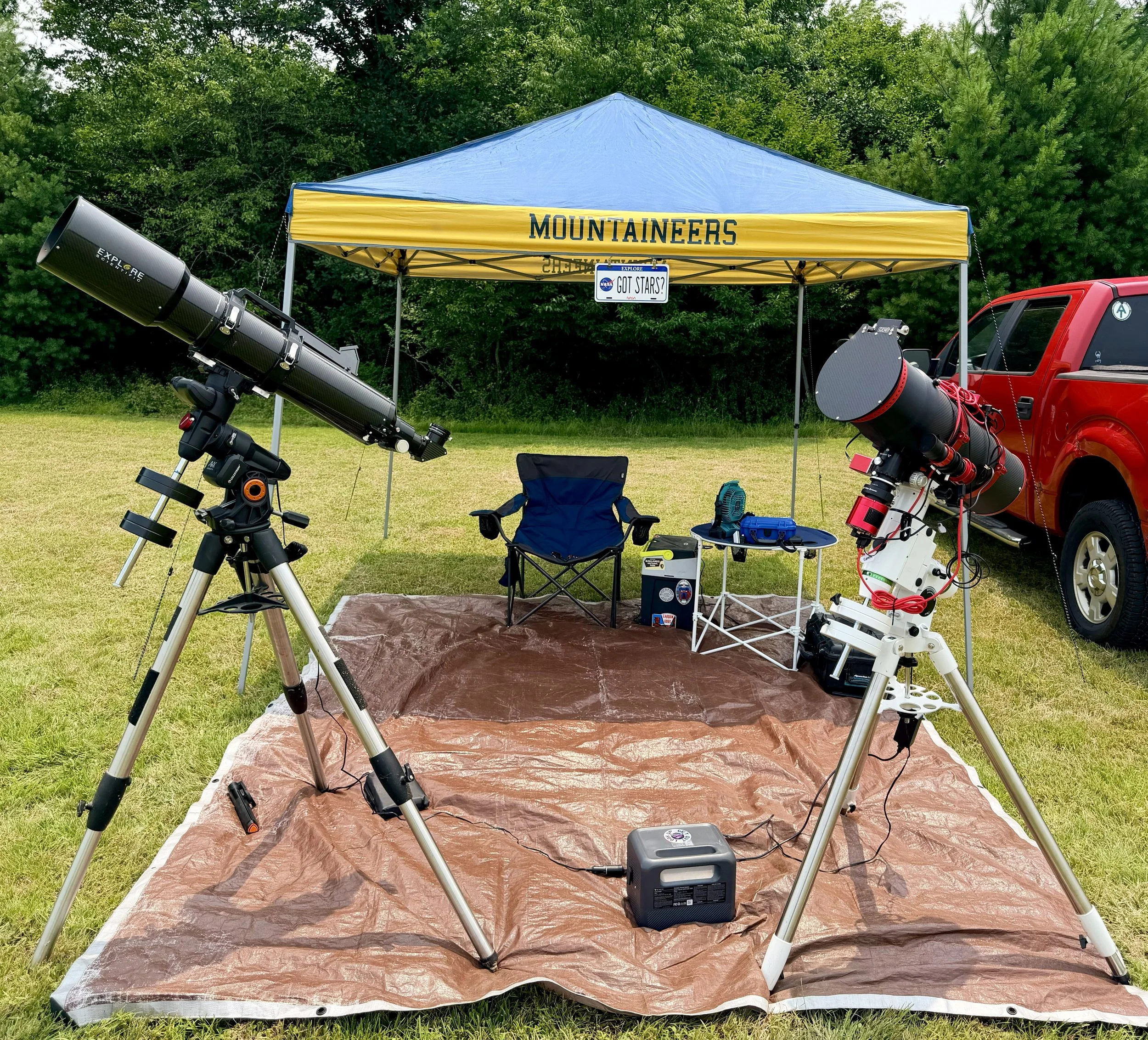
Setup for the week!
This being my first star party, I wasn’t sure what I would need, but this setup worked out pretty well!
As I entered the field I passed a white barn. This barn was setup with a charging station (very important for those of us with batteries running our gear), as well as bathrooms and showers for those that chose to camp in the field.
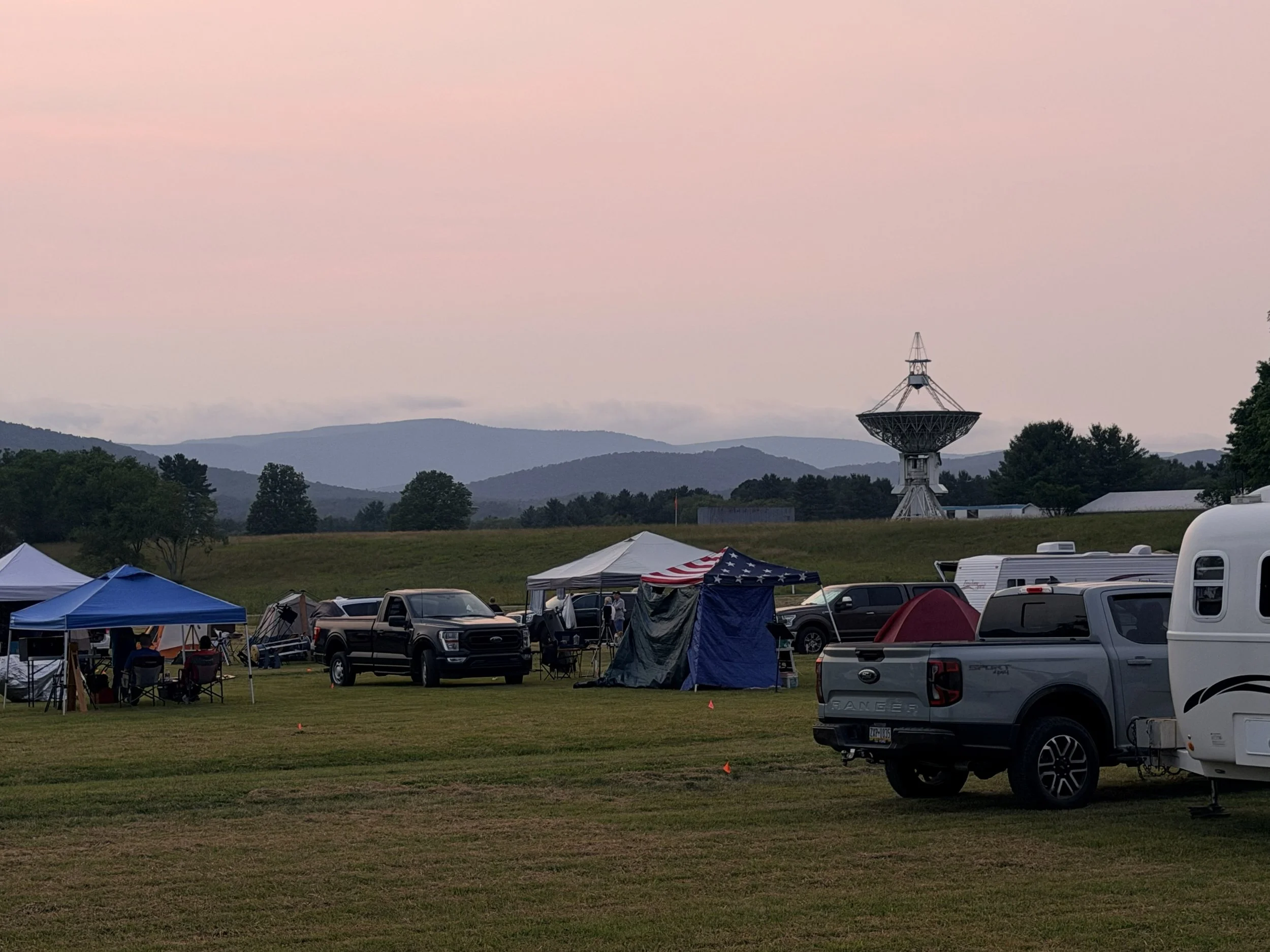
The location is just amazing!
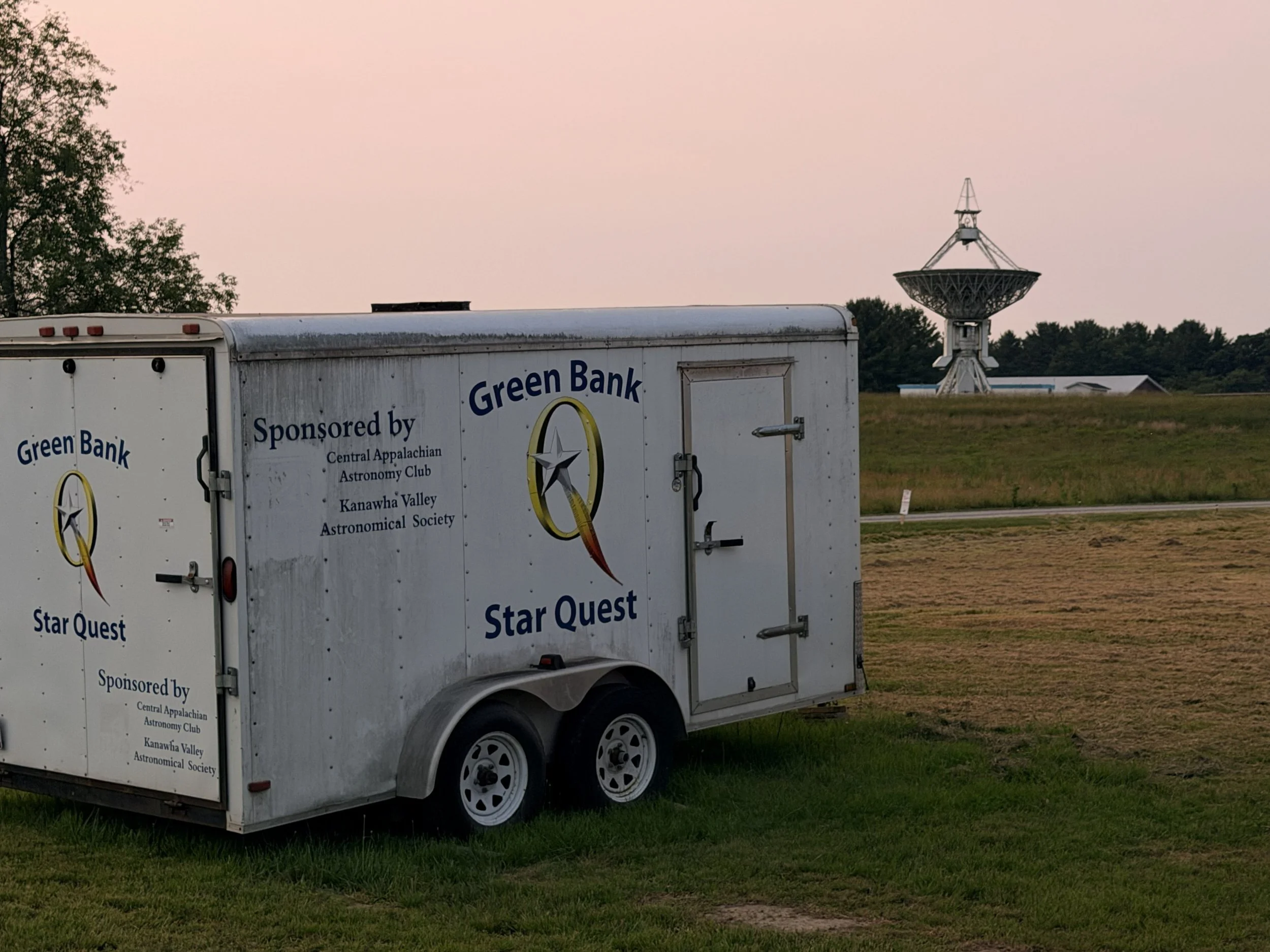
Sponsor trailer
At the visitors center was a vendor area along with an auditorium and classrooms where various presentations would be happening during the week. In the exhibit hall you could also find an ethernet cable with both a USB-C and a Lightning cable attachment that would allow you to get internet access. As there was only one of those, you did have to be aware that others were waiting to use it, so be courteous!
Dinner at the cafeteria was chicken-fried steak, mashed potatoes, and green beans. It was really good!
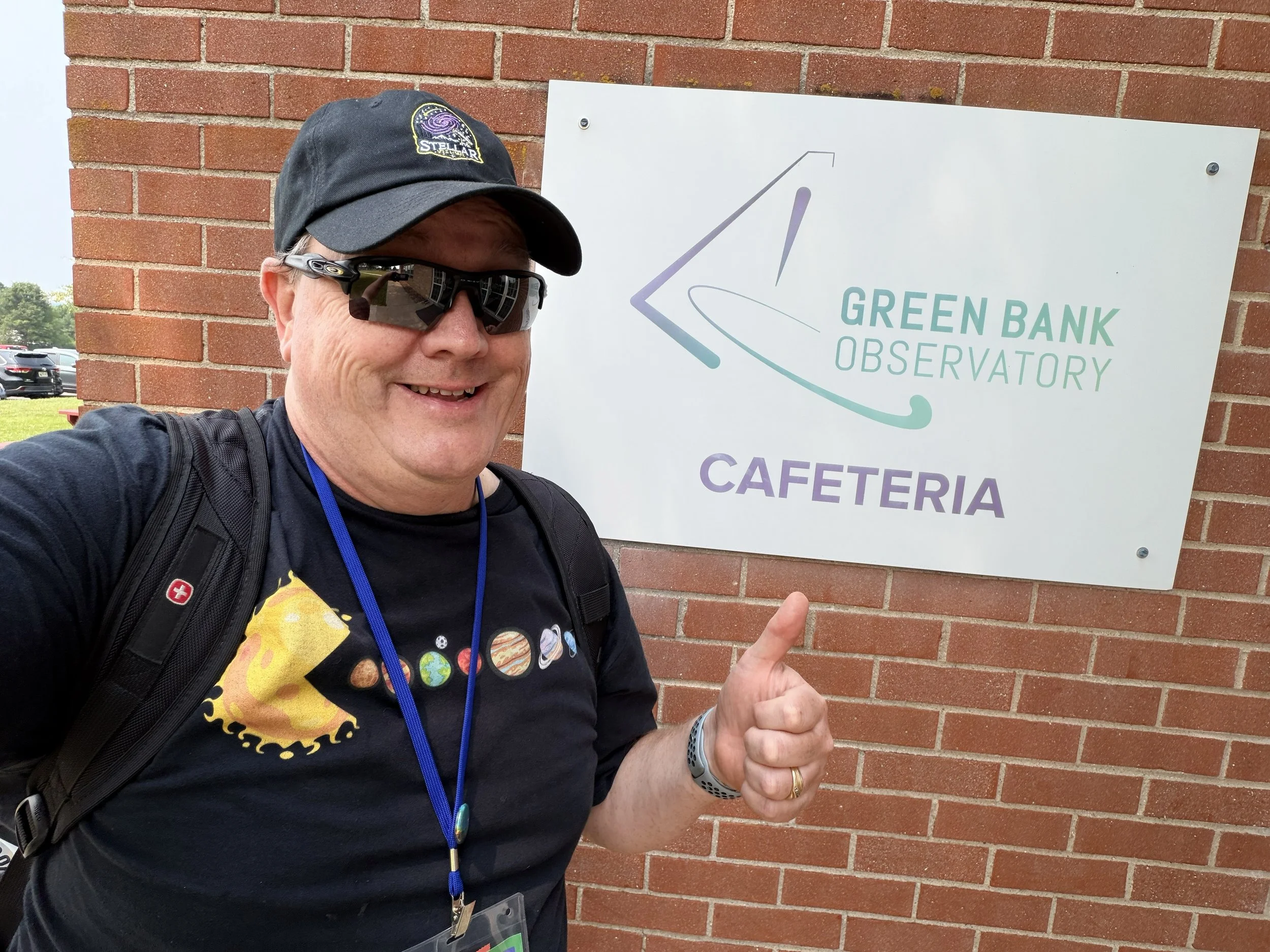
I spent the evening down at the viewing field with my gear. From my location I had to scrap my idea of doing a mosaic of the Antares/Rho Ophiuchi region since the tree-line behind me would block much of that area of the sky. I instead focused on Cygnus, and Caldwell 27 (NGC 6888) the Crescent Nebula. The dew was really heavy this night, with the water dripping off of my canopy and smacking on the ground tarp, sounding like rain. I was only able to get about 45 minutes of imaging before an amazing amount of fog rolled in around 2:00 AM! It was so thick that I could no longer see the lights on the GBT. That’s when I decided to call it a night.
Thursday I slept in and missed breakfast, and spent the rest of the morning down at the viewing field. I pulled my data off of the ASIAir, and proceeded to work on processing it. Interesting fact about Siril: It requires connection to the internet in order to properly plate-solve and perform color correction, so I was unable to do that. Still I felt pretty good about the image I got!
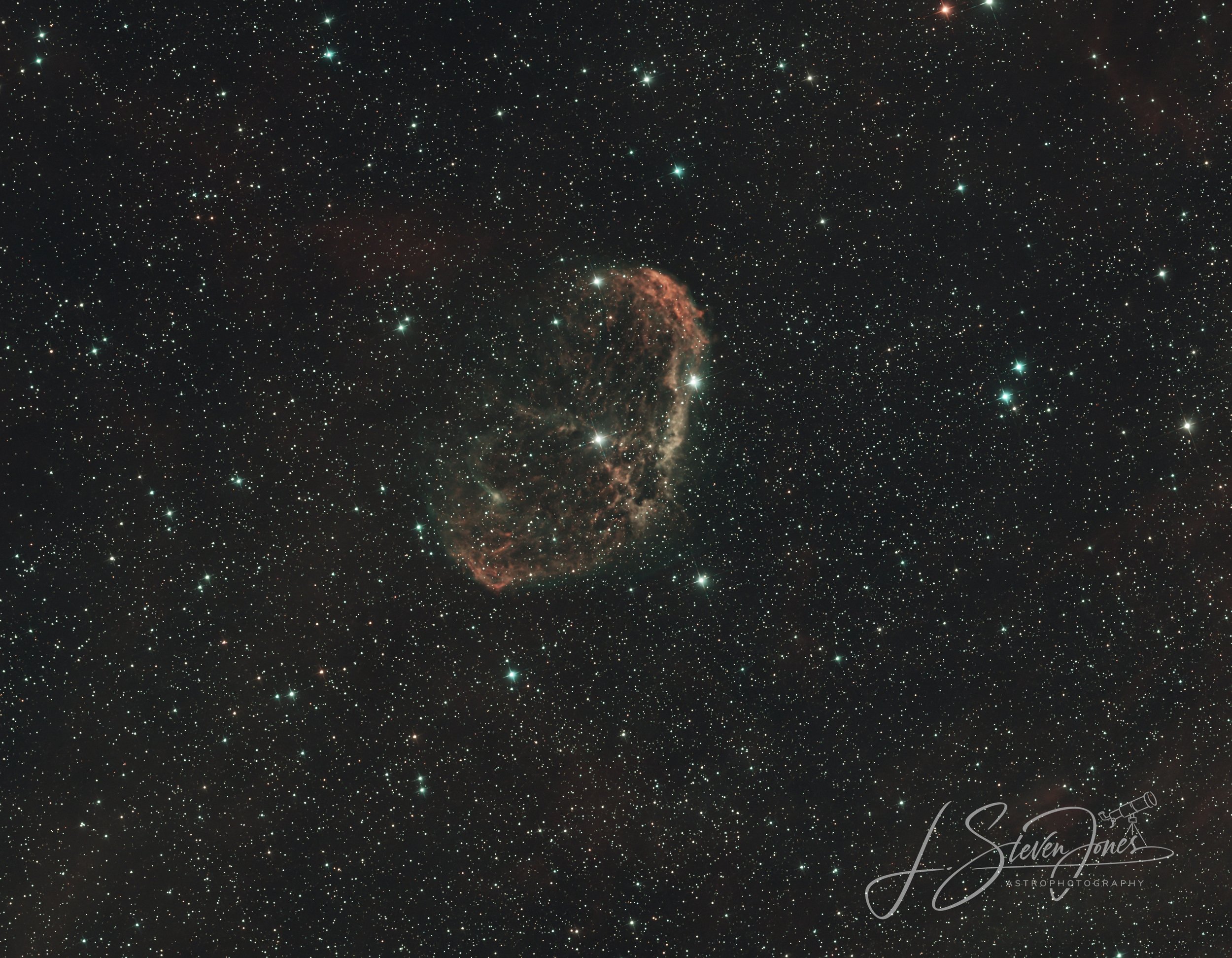
The Crescent Nebula
This was my first time using the RC Astro scripts in Siril, and I’m pleased with this!
My plan tonight then was to do this region again. I had checked Stellarium to look at the area around C27, and decided I would take my first stab at a mosaic. I planned an 8-panel mosaic that would go from the star Sadr to C27.
That afternoon I signed up for the training on the 40-foot radio telescope. Installed in 1961, this telescope only moves up & down (in declination), and was the world’s first fully automated telescope. The telescope was recommissioned in 1987 as an educational scope, with students from all over coming to be radio astronomers for the day. The experience here will have to be a post all on it’s own!
After dinner (pasta bar!) I went to hang out with my telescopes. I put away the 127ED after the dew experience from last night as I wanted to focus on imaging and not worry with visual observing. There were plenty of people set up with visual telescopes that would let me view!
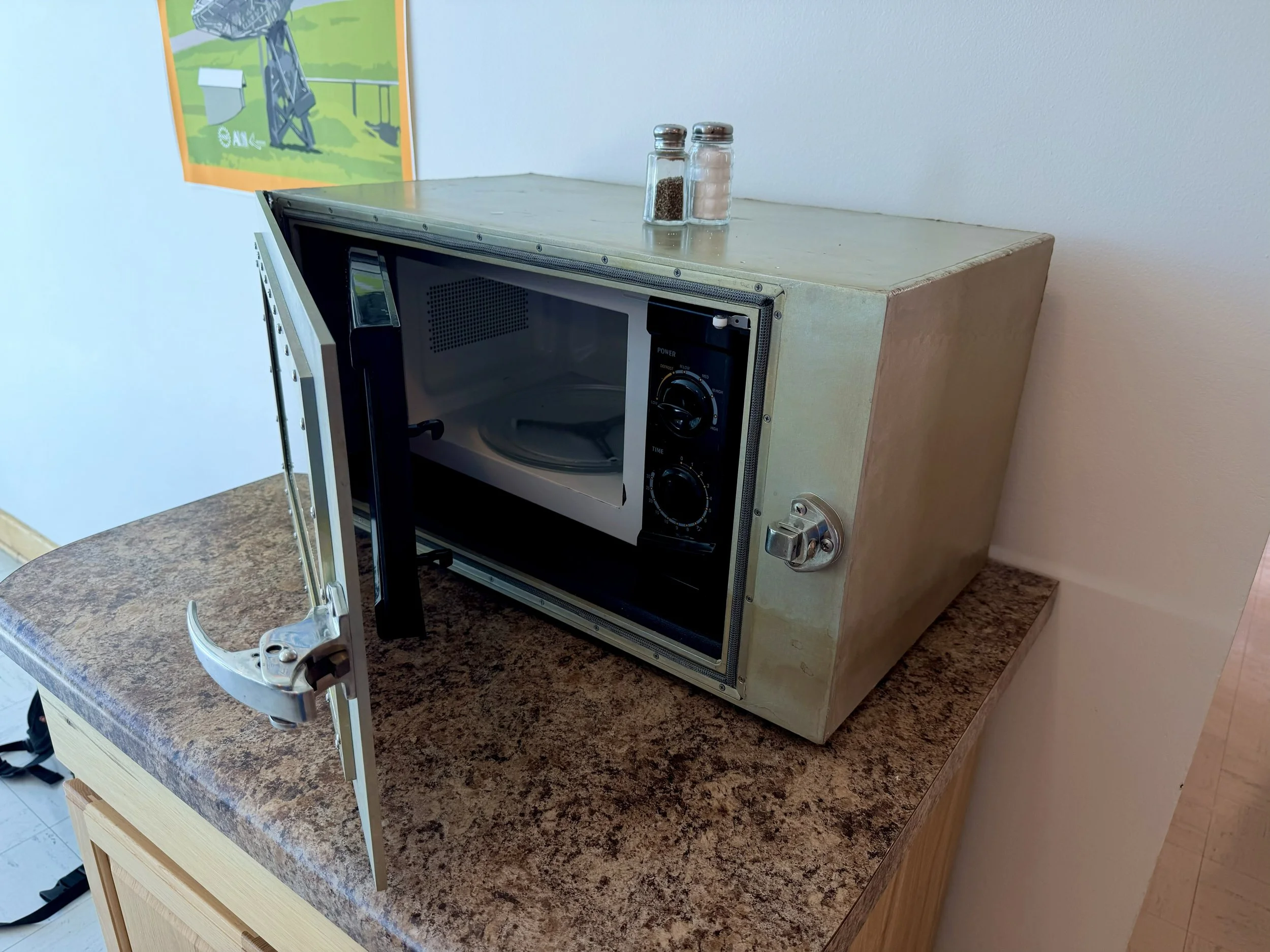
Microwave in a box!
In the cafeteria the microwave has to be in it’s own Faraday cage-like device so as not to interfere with the telescopes!
This evening turned out to be the best evening of the week! The stars came out for quite the show! There were several meteors and even more satellites zooming around, causing lot’s of “Ooo’s” and “Ahhh’s!” Once I got the plan running on my telescope, I set out to check out some of the other rigs and to work on my iPhone photography, finally calling it a night around 3:00 AM and heading back to the bunkhouse.
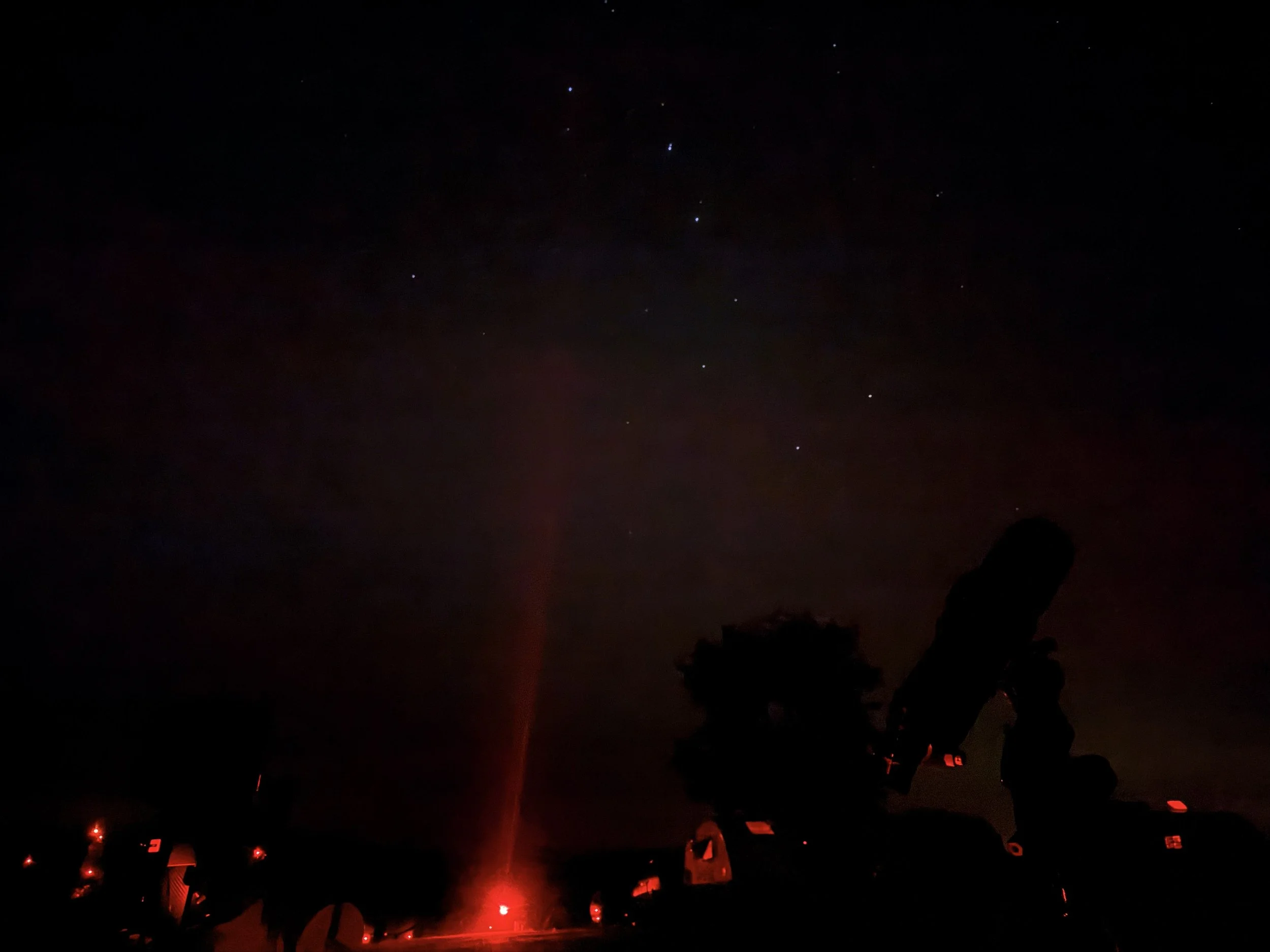
Big Dipper and Red Lights
Friday I attended a presentation my Nate Tehrani, Nancy Grace Roman Flight Software Engineer at NASA Goddard. I am preparing to give a presentation in February at SEEC (assuming it gets approved) and was able to get his contact information, as he would be an excellent help! I then drove to Elkins to meet my brother-in-law to deliver the telescope I had brought for my nephew’s birthday. While there I finally had cell signal, so I spent time catching up on emails and calling home. I also checked the forecast for tonight: 80% chance of clouds. So when I got back later that afternoon, I decided to go ahead and pack everything up as I was leaving Saturday morning, and I didn’t want to pack up wet gear if it rained! This ended up being a good decision, as it was quite cloudy, though it did not rain.
At 11:00 PM I walked to the 40-foot telescope, where we were allowed to work with the equipment to take our own readings. I was quite surprised once I got there to realize that there was no staff with us, we had free usage of the equipment! That was actually intimidating! I was able to make a couple of detections of hydrogen bands slightly above the galactic plane, which MAY have been two different arms of the galaxy due to the frequencies at which we detected them.
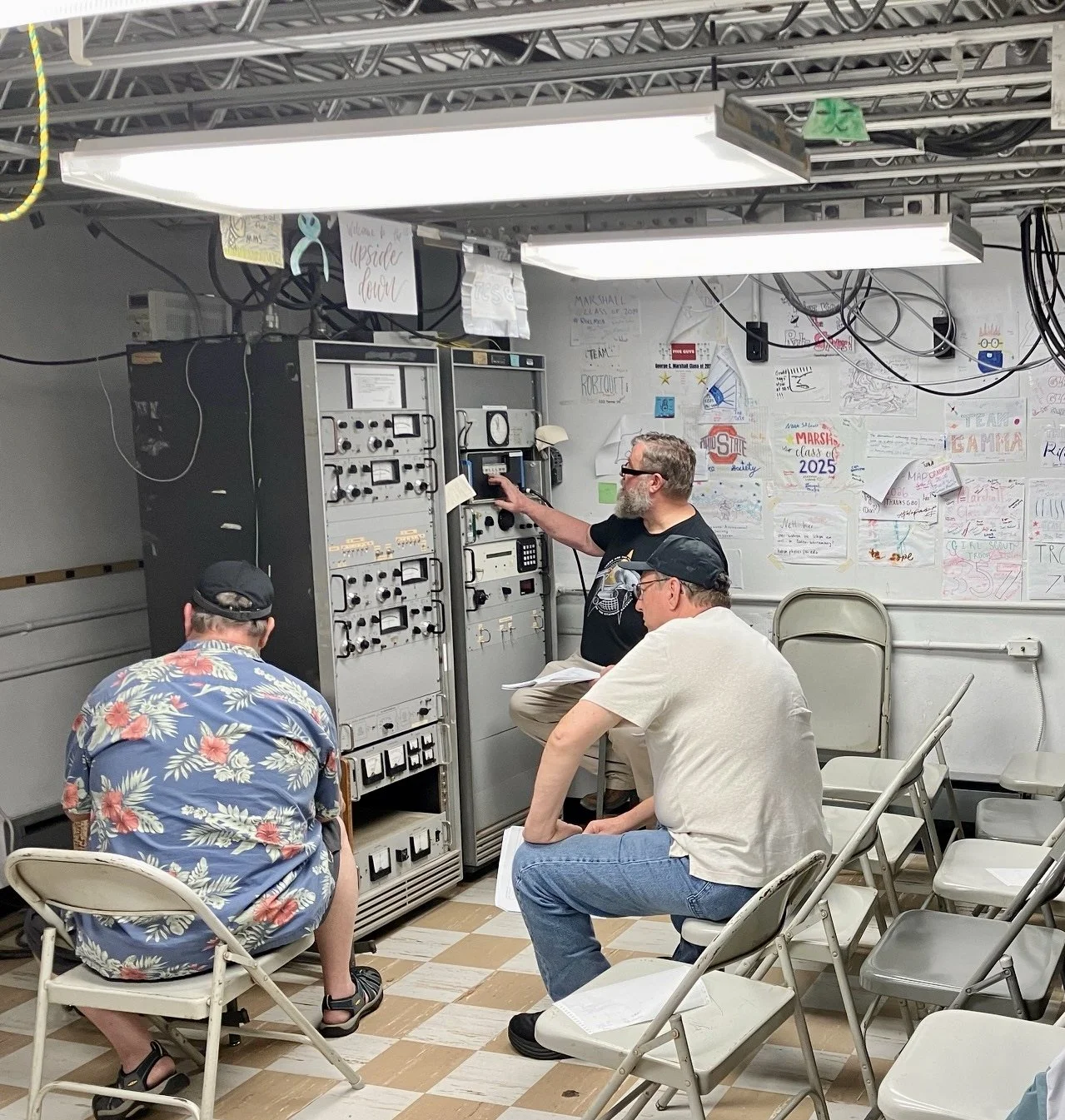
Operating the 40-foot telescope without supervision!
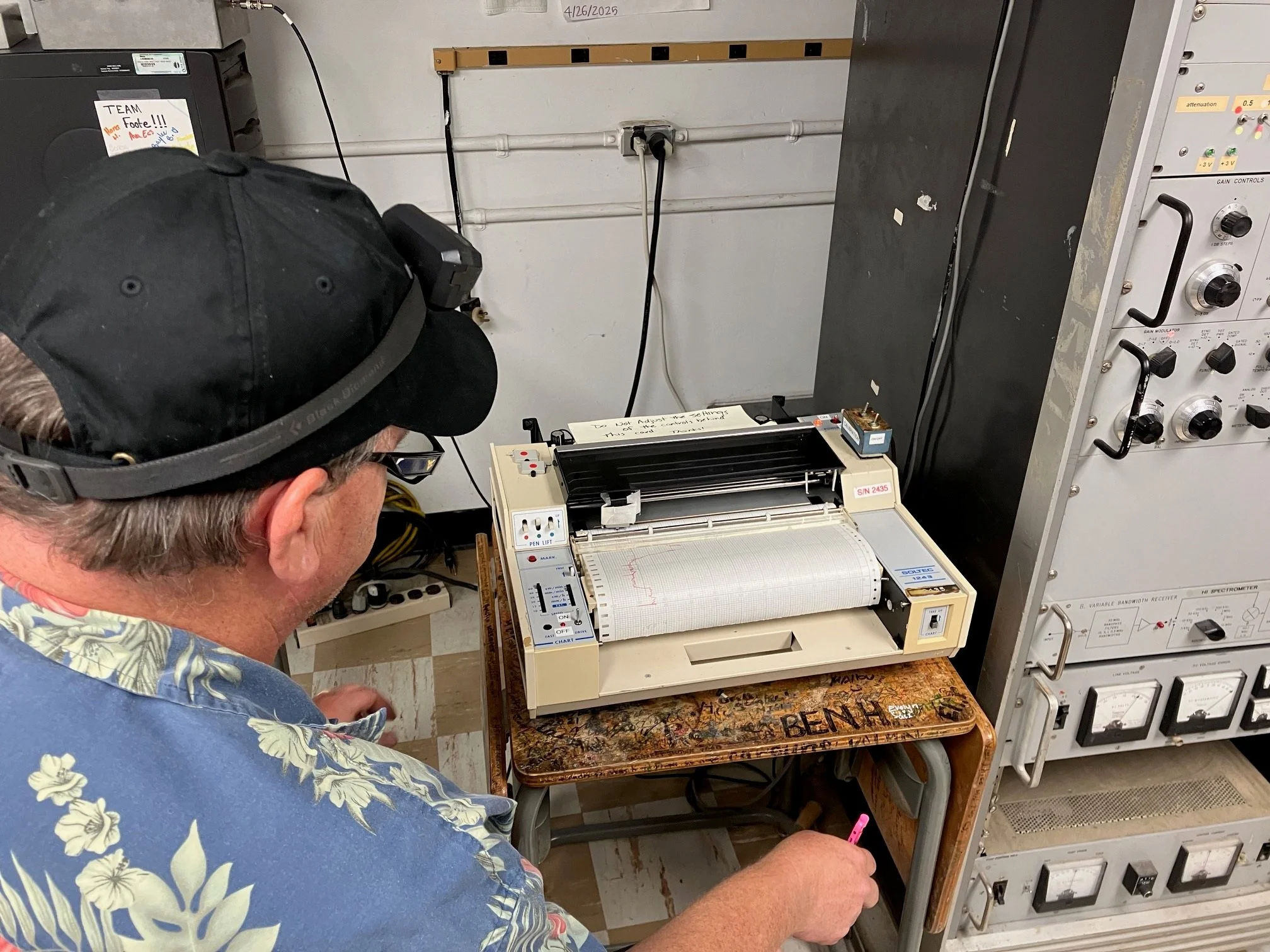
My job was to push the red button every 10 seconds.
Saturday morning was breakfast, group photo, and then heading home! There were lots of other activities planned for the event that day, but I had a 9-hour drive home.
All in all I had an absolute blast! I am surprised that this was the first I had heard of this event, and I really want to come back for future events. I was very impressed with the quality of speakers that came, and the amount of activities available for all ages! So if you can, start making plans for next year!
Get out & look up!